If you have ever gotten confused over all the different names given to different varieties of plants, you are not alone! This is perhaps one of the more complicated aspects of gardening because there are just so many options, so many names, how do you know what to pick?
While picking a favorite variety will take some trial and error in the form of planting and deciding whether you like it or not (or, ask to try your friends produce and ask him or her what variety they planted), being able to choose seeds that are organic, hybrid, open pollinated or heirloom doesn’t have to be that confusing. I will go over each one so you become familiar with the terms.
As a side note, many people are fearful of buying GMO seeds. While GMO seeds are available to farmers, they are not available to the home gardener. If you are purchasing seeds from a home garden seed catalog or purchasing them at a store, you don’t need to worry about accidentally buying GMO (genetically modified) seeds. To buy GMO seed, a farmer often has to sign a contract, so you wouldn’t make any mistake as to what you are buying. So in reality, that “Non-GMO” label doesn’t really mean much, other than to reassure customers.
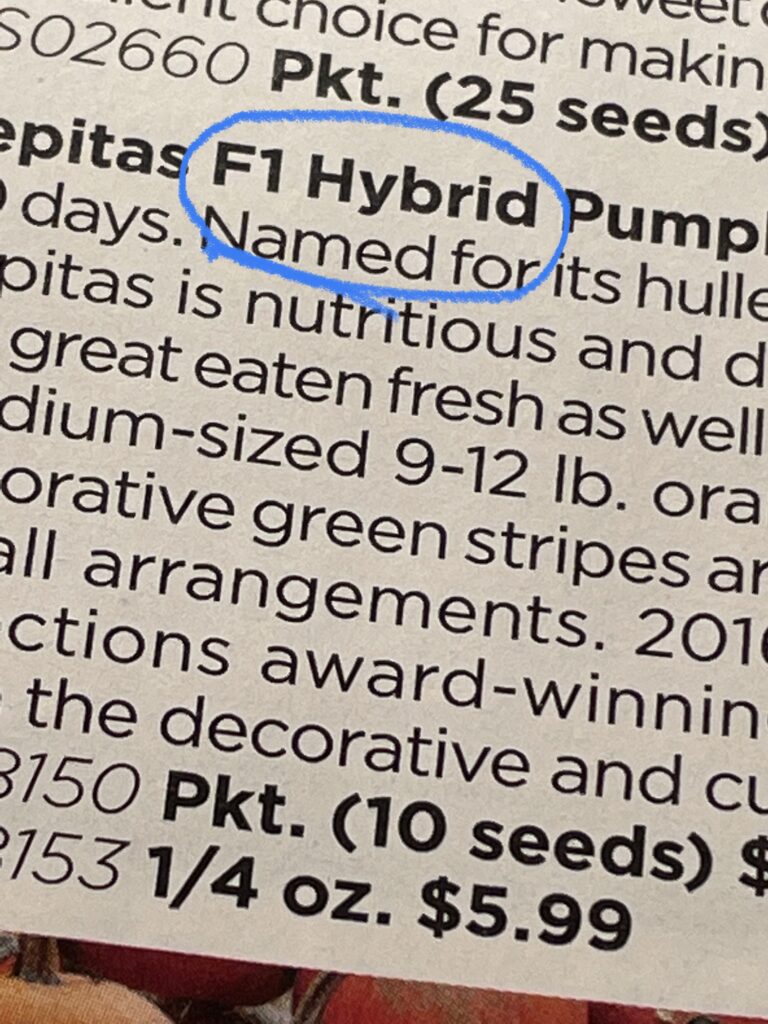
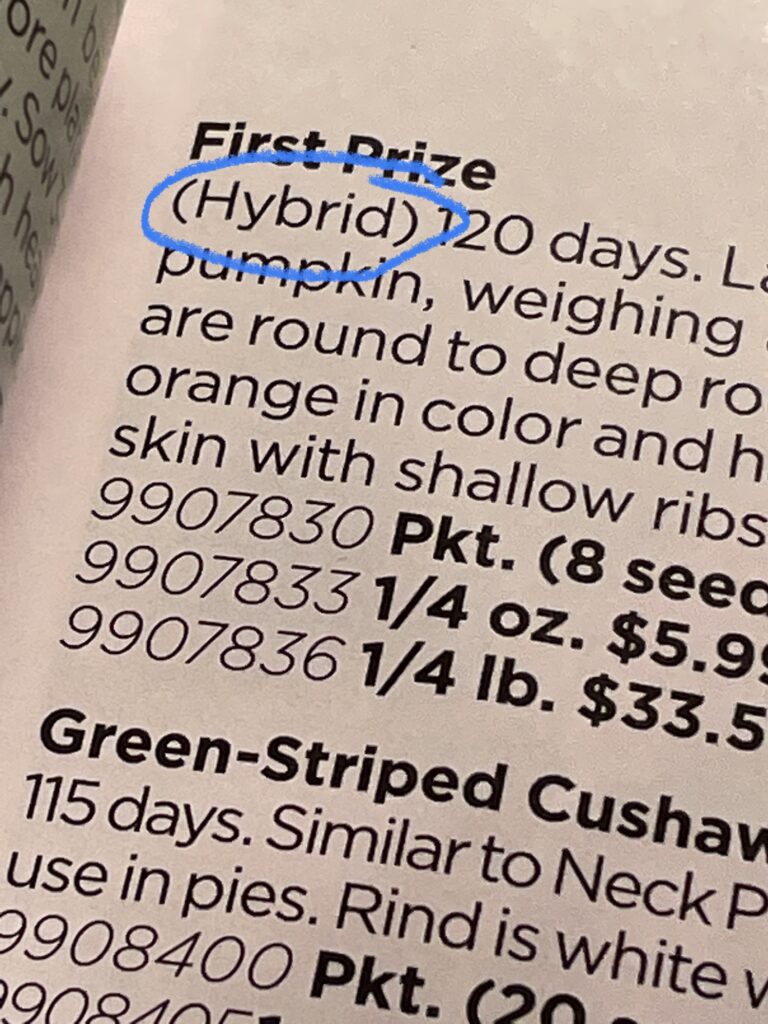
Hybrid: A hybrid seed will produce a crossbred plant. It is a purposeful cross between two different parent plants. Hybrids can be bred for specific qualities, such as disease resistance, being slow to bolt in hot weather, tolerating drought, maturing early, etc. They also produce pretty constant results. The main downfall to a hybrid seed is that if you plan to save seed for the following year, hybrid seeds will not produce the exact same plant they came from when you plant those seeds the following year. When looking at seed packets, somewhere on the pack you will see either ‘F1’ or the word hybrid in the name or description. It has been said that hybrid plants often lack flavor in exchange for beneficial traits, but that is up to each individual gardener to decide.
Open Pollinated: A seed that is open pollinated means the flowers are either self-fertilized, or fertilized by pollinators or wind. Sometimes by hand, if trying to keep the seed pure for saving. The seed comes from two parents of the same variety so the seed is considered ‘purebred’ and for the purpose of seed saving, if isolation methods are necessary and used, this or heirloom seed is what you want to grow. Often, a seed packet does not specify ‘open pollinated’ on it (it will specify if hybrid), but if you are unsure you can always ask your internet search engine and find out whether the variety you are curious about is open pollinated or hybrid. Sometimes, open pollinated seed is a little more susceptible to pests or disease, or a little more temperamental to deal with. It is interesting to note, that through careful seed saving practices, you can work on correcting these things over time, as the seed learns to adjust and become more tolerant in your own soil. Of course, having fertile soil to begin with, proper spacing, and good management practices go a long way in producing a successful garden no matter the seed!
Organic: Organic seeds can be open pollinated, heirloom, or hybrid seeds. The name means that the plant they came from was grown with organic standards. You can continue to grow them organically once you plant them, or grow them with conventional methods. Organic seeds are always marked organic.
Heirloom: Heirloom seeds are open pollinated, breed true, and passed down from generation to generation. The plants grown from these seeds can be traced back in human history for long periods. These seeds can be organic (if the parent plant was grown with organic standards, and you continue), or conventional. A heirloom variety is often 50-100+ years old. Heirloom seeds are almost always marked as ‘heirloom’ and they are safe to save seed from.